Enneagram Self-Preservation Two: The Nurturing Helper Two
Enneagram Twos are often called “The Helpers.” They’re warm, caring, and focused on meeting others’ needs, sometimes at the expense of their own. But each subtype of Two expresses this helping energy differently, depending on which instinct leads.
The Self-Preservation Two (Self-Preservation 2) has been nicknamed “Privilege,” a term used by Enneagram teacher Beatrice Chestnut in The Complete Enneagram, based on psychiatrist Claudio Naranjo’s foundational work with subtypes. “Privilege” reflects this subtype’s sense of entitlement to care, attention, and resources in return for their generosity.
For accessibility, I’ll also call this subtype “The Nurturing Helper Two.” This phrase captures the Self-Preservation 2’s instinctive expectation that because they give so much, they deserve to be cared for and provided for in return.
In this post, we’ll explore the defining traits of the Self-Preservation Two, how they show up in relationships and work, how they differ from the other Two subtypes, and what growth looks like for them.
Please note - this post contains affiliate links. If you click and make a purchase, I may earn a small commission at no extra cost to you.
The Self-Preservation Two at a Glance
At their core, Twos long to feel loved and wanted. They fear being unworthy of love, so they often earn affection by helping, serving, and making themselves indispensable.
The passion of Type Two is pride—a forgetting of their own needs in order to gain significance through meeting others’ needs.
When the Self-Preservation instinct leads, this dynamic takes on a unique form: Self-Preservation 2s see themselves as deserving of special care and treatment because of all they give. Their generosity comes with an unspoken expectation of return.
🔑 Key themes for Self-Preservation 2s include:
Sense of entitlement
They believe they deserve care and attention in exchange for their efforts.Indirect needs
Instead of asking directly, they expect others to notice and meet their needs.Warmth and generosity
They still bring the nurturing, helpful energy Twos are known for.Disappointment
They may feel hurt when others don’t reciprocate in the way they expect.
In short: Self-Preservation 2s are warm givers who quietly expect to be given to in return.
Strengths and Challenges of Self-Preservation 2s
The Self-Preservation 2 brings both powerful gifts and relational blind spots.
💪 Strengths
Generosity
They love to give, nurture, and provide for others.Warmth and charm
They naturally draw people in with friendliness.Ability to anticipate needs
They often know what others want before it’s voiced.Confidence
Compared to other Twos, Self-Preservation 2s can appear more self-assured and grounded.
⚠️ Challenges
Unspoken expectations
Their giving often comes with strings attached, even if they don’t admit it.Entitlement
They may feel they “deserve” special treatment or recognition.Disappointment and resentment
When reciprocity doesn’t come, they can feel slighted.Difficulty owning needs
Rather than ask directly, they wait for others to notice.
This combination means Self-Preservation 2s often appear generous and confident—but underneath, they may feel underappreciated or taken for granted.
Want to understand your SP2 wiring at a deeper level?
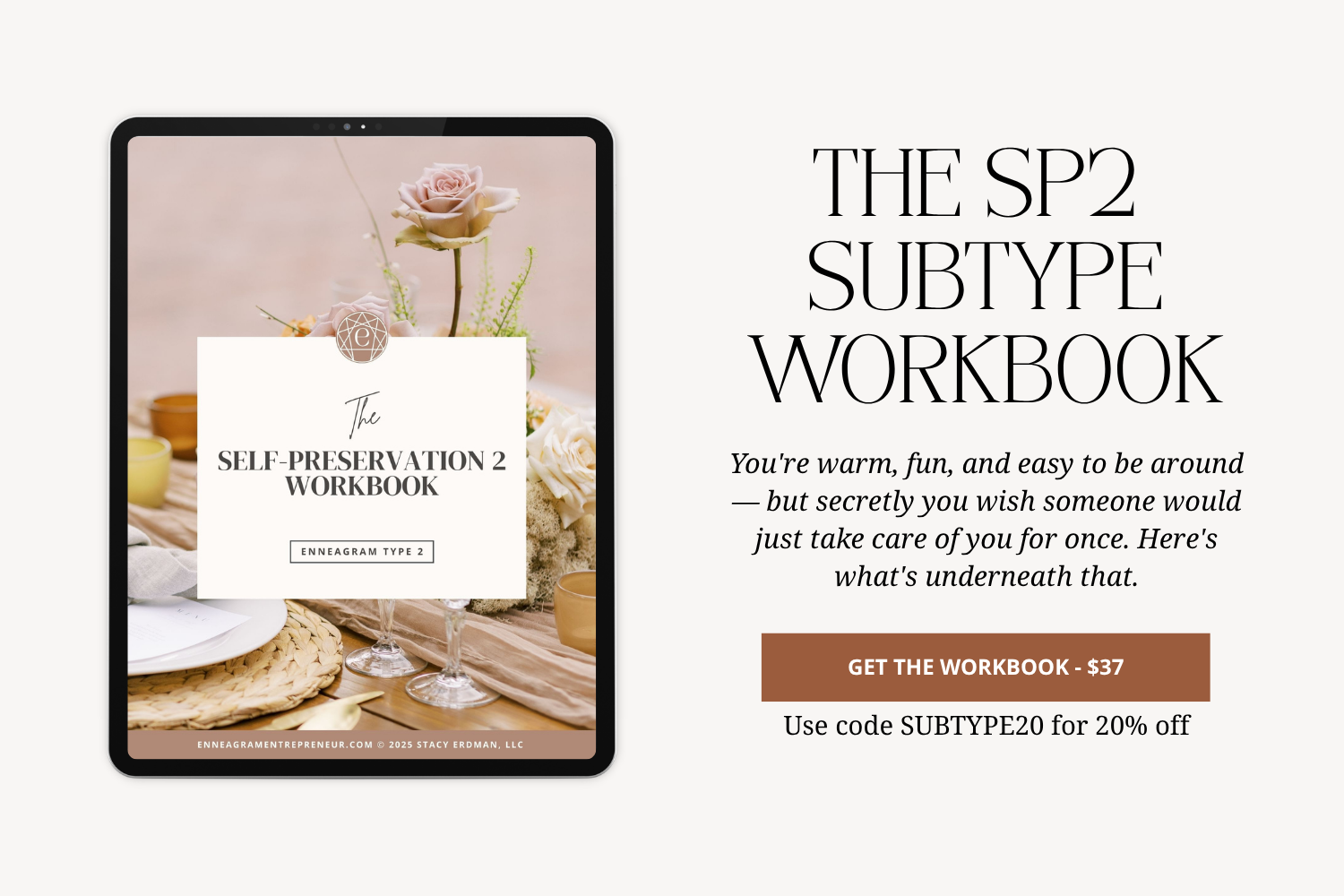
This guided workbook is designed to help you work with the patterns behind your Self-Preservation 2 subtype.
Self-Preservation 2s in Relationships and Work
How does this subtype show up in daily life? Let’s look at relationships and work together, since the themes overlap.
❤️ In Relationships
Self-Preservation 2s bring warmth, care, and attentiveness to their relationships. They are generous partners, friends, and family members who love to nurture through food, gifts, or thoughtful acts.
But their hidden expectation of reciprocity can create tension. If their efforts aren’t noticed or returned, they may feel resentful or withdraw affection. Partners may be confused because the Self-Preservation 2 rarely asks directly for what they want.
For growth, Self-Preservation 2s need to learn to name their needs openly rather than hoping others will intuit them.
💼 At Work
In professional life, Self-Preservation 2s are helpful, reliable, and warm. They build strong workplace relationships and often serve as the glue of a team.
However, they may struggle with boundaries, giving too much in hopes of recognition. If their efforts go unacknowledged, they may feel slighted or entitled to compensation in ways that frustrate colleagues.
The key for Self-Preservation 2s at work is to separate generosity from expectation, giving freely while also asking directly for what they need.
How Self-Preservation 2s Differ from Other Type Two Subtypes
All Twos are helpers, but each subtype expresses helping in a unique way:
Self-Preservation 2 vs. Social 2:
Self-Preservation 2s give with an expectation of reciprocity and recognition.
Social 2s focus on ambition, building influence and status through helping.
Self-Preservation 2s want care in return; Social 2s want visibility and prestige.
Self-Preservation 2 vs. Sexual 2:
Self-Preservation 2s help broadly but with quiet expectations of being cared for.
Sexual 2s use seduction, intensity, and even aggression to gain closeness.
Self-Preservation 2s appear more grounded; Sexual 2s more dramatic and fiery.
These distinctions help show why some Twos feel warm and entitled, while others feel ambitious or passionate.
The Growth Path for Self-Preservation 2s
For the Self-Preservation Two, growth means moving from entitlement to humility, and fromindirect needs to direct requests.
Key practices include:
Ask directly:
Practice voicing needs instead of expecting others to guess.Give freely:
Notice when generosity is tied to expectation, and release the strings.Cultivate humility:
Let go of the sense of “deserving” and lean into authentic gratitude.Balance giving and receiving:
Allow others to give without feeling guilty or keeping score.
When Self-Preservation 2s learn to name their needs openly and release entitlement, their natural generosity becomes even more powerful and healing.
If this resonated, the SP2 Subtype Workbook will take you deeper:
Final Thoughts
The Self-Preservation Two—Privilege, or the Nurturing Helper Two—is warm, generous, and caring, yet carries hidden expectations of reciprocity. They thrive when they balance giving with honest self-expression, moving from entitlement to humility.
If you identify with this subtype, you might ask yourself:
“Am I giving freely, or am I hoping for something in return?”
Want to explore all 27 Enneagram subtypes and see how they shape behavior, relationships, and growth?
👉 Download my free Enneagram Subtypes Guide here.