Enneagram Social Five: The Belonging Investigator

Enneagram Fives are often called “The Investigators” or “The Observers.” They value knowledge, independence, and conserving energy. At their core, Fives long to be capable and self-sufficient, while fearing depletion, incompetence, or intrusion. But each subtype expresses this drive differently, depending on which instinct is dominant.
The Social Five (Social 5) has been nicknamed “Totem,” a term used by Enneagram teacher Beatrice Chestnut in The Complete Enneagram, building on psychiatrist Claudio Naranjo’s work with subtypes. “Totem” reflects the Social 5’s strategy of finding belonging and safety through identifying with a group, mentor, or shared symbol of knowledge.
For accessibility, I’ll also call this subtype “The Belonging Investigator.” This phrase highlights how Social 5s channel their instinctual energy into finding security by connecting intellectually or socially with communities and trusted figures.
In this post, we’ll explore the defining traits of the Social Five, how they show up in relationships and work, how they differ from the other Five subtypes, and what growth looks like for them.
Please note - this post contains affiliate links. If you click and make a purchase, I may earn a small commission at no extra cost to you.
The Social Five at a Glance
At their core, Fives want to be competent and capable. They fear being depleted or exposed as inadequate, so they often retreat into their minds, conserving resources.
The passion of Type Five is avarice—a holding back of energy, time, and self-expression.
When the Social instinct leads, this avarice gets channeled into connection through knowledge and affiliation. Social 5s look for safety by aligning with groups, mentors, or communities that share their values and interests.
🔑 Key themes for Social 5s include:
Belonging through ideas
They often identify with intellectual groups or schools of thought.Mentorship and teachers
They may attach to respected figures for safety and guidance.Social safety
They find protection by belonging to a trusted community.Curated participation
They selectively share themselves within safe circles.
In short: Social 5s seek security through affiliation, community, and shared knowledge.
Strengths and Challenges of Social 5s
The Belonging Investigator brings loyalty and intellectual contribution, but also faces struggles with dependence and visibility.
💪 Strengths
Community-minded
They value shared knowledge and collective growth.Loyalty
They often form deep, lasting bonds with mentors or groups.Insightful
Their intellectual curiosity benefits the communities they join.Supportive learners
They contribute steadily once they feel safe.
⚠️ Challenges
Over-identification with groups
They may rely too heavily on mentors or communities for identity.Fear of exclusion
They can withdraw if they feel they don’t belong.Holding back
Even in groups, they may stay quiet, conserving energy.Difficulty standing alone
Their sense of security may feel fragile outside of affiliations.
This balance makes Social 5s appear thoughtful and connected, but inwardly, they may fear disconnection or inadequacy without their intellectual “totems.”
Want to understand your SO5 wiring at a deeper level?
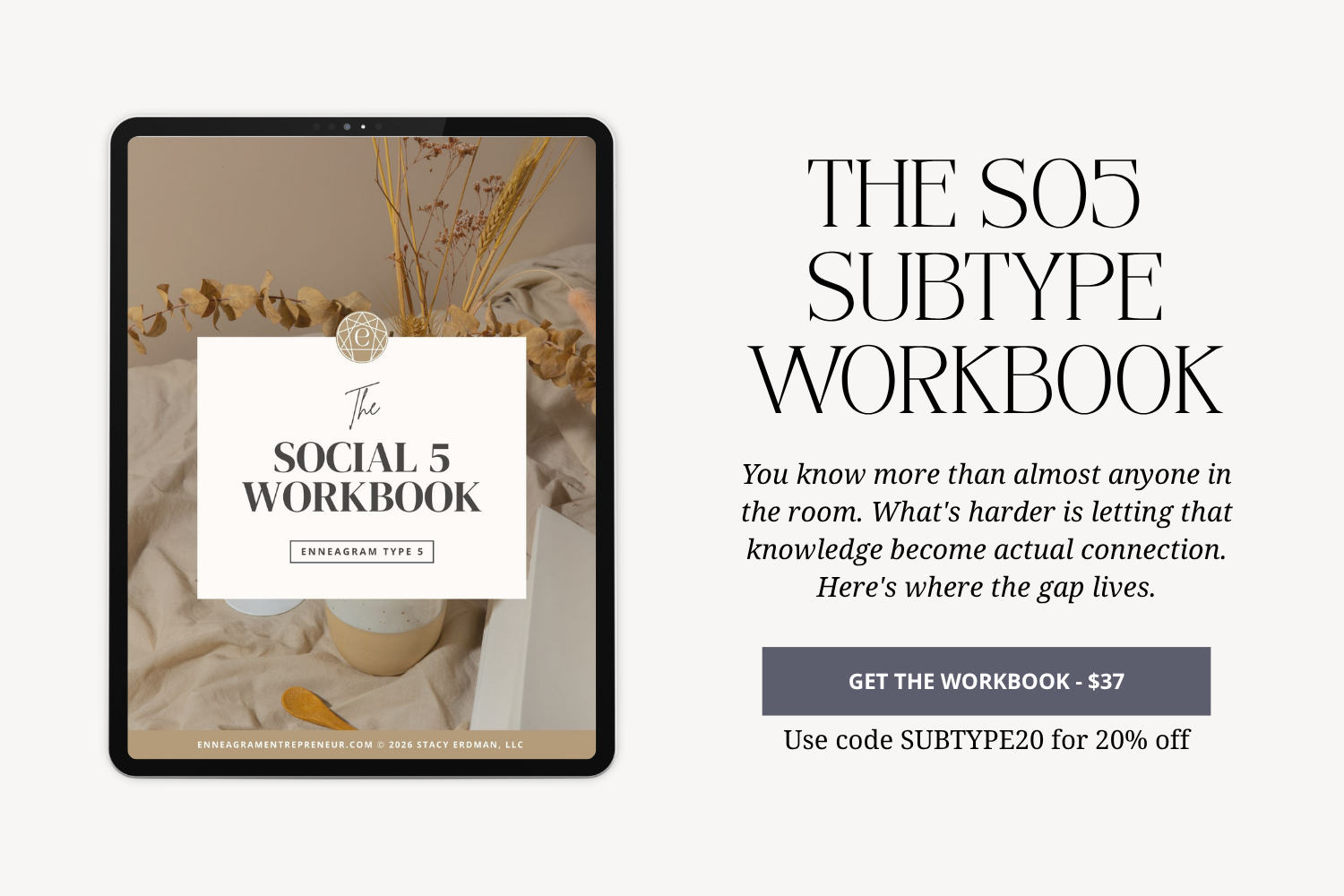
This guided workbook is designed to help you work with the patterns behind your Social 5 subtype.
Social 5s in Relationships and Work
How does this subtype show up in daily life? Let’s look at relationships and work together, since the themes overlap.
❤️ In Relationships
Social 5s bring loyalty, thoughtfulness, and curiosity to relationships. They want to share ideas, explore concepts, and feel aligned with their partners’ values.
But their reliance on external affiliation can create distance. They may prioritize intellectual belonging over emotional intimacy, or fear showing up vulnerably without the safety of shared frameworks.
Growth in relationships means learning to trust personal presence over group identity.
💼 At Work
In professional life, Social 5s thrive in environments that value collaboration, shared knowledge, and intellectual exploration. They may enjoy academia, research teams, or organizations with clear structures and values.
However, they may hold back contributions until they feel truly safe, and they can become over-reliant on mentors or communities for validation. Their growth edge at work is to step forward independently, trusting their own voice.
How Social 5s Differ from Other Type Five Subtypes
Each Five subtype conserves energy differently:
Social 5 vs. Self-Preservation 5:
Self-Preservation 5s seek safety through withdrawal and self-sufficiency.
Social 5s seek safety through group belonging, mentors, or communities.
Self-Preservation 5s are fortress-like; Social 5s are affiliation-oriented.
Social 5 vs. Sexual 5:
Social 5s find security through collective identity and shared values.
Sexual 5s focus intensely on one-to-one connection, often merging deeply.
Social 5s are group-minded; Sexual 5s are intimate and penetrating.
This shows why some Fives seem hermit-like, others highly social in intellectual groups, and others deeply bonded in intense relationships.
The Growth Path for Social 5s
For the Social Five, growth means moving from safety in groups to security in self-expression.
Key growth practices include:
Trust your own voice:
Step into visibility even without group backing.Balance belonging with independence:
Stay connected while cultivating self-trust.Practice vulnerability:
Share more of your authentic self, not just ideas.Release over-reliance:
Notice when mentors or groups are carrying too much of your identity.
When Social 5s embrace their own voice, they discover that true belonging starts from within, not just affiliation.
Final Thoughts
The Social Five—Totem, or the Belonging Investigator—is thoughtful, loyal, and community-minded. They seek safety through mentors, groups, and shared ideas. Yet their growth lies in trusting their own presence, speaking authentically, and remembering that they belong simply by being themselves.
If you identify with this subtype, you might ask yourself:
“Am I relying too much on groups for identity—or am I trusting my own voice?”
Want to explore all 27 Enneagram subtypes and see how they shape behavior, relationships, and growth?
👉 Download my free Enneagram Subtypes Guide here.