Enneagram Social Six: The Responsible Six

Enneagram Sixes are often described as loyal, responsible, and security-focused. At their core, Sixes long for safety and stability, while fearing betrayal, danger, or being unprepared. Each subtype expresses this core concern differently, depending on the dominant instinct.
The Social Six (SO6) has been nicknamed “Duty,” a term used by Enneagram teacher Beatrice Chestnut in The Complete Enneagram, drawing from psychiatrist Claudio Naranjo’s early work on subtypes. “Duty” reflects the Social 6’s strategy of finding security through fulfilling obligations, following rules, and staying aligned with collective structures.
For accessibility, I’ll also call this subtype “The Responsible Six.” This phrase captures the Social 6’s instinctive focus on duty, loyalty to systems, and commitment to being a reliable member of the group.
In this post, we’ll explore the defining traits of the Social Six, how they show up in relationships and work, how they differ from the other Six subtypes, and what growth looks like for them.
Please note - this post contains affiliate links. If you click and make a purchase, I may earn a small commission at no extra cost to you.
The Social Six at a Glance
At their core, Sixes want to feel safe and supported. They fear being unprepared, abandoned, or left vulnerable to danger.
The passion of Type Six is fear—experienced as vigilance, scanning for threats, and seeking reliable structures or authorities.
When the Social instinct leads, this vigilance becomes especially focused on duty, rules, and group belonging. Social 6s build security by being responsible, trustworthy, and aligned with collective systems of authority.
🔑 Key themes for Social 6s include:
Duty and responsibility
They take commitments and obligations very seriously.Obedience to rules
They rely on structures and systems to provide security.Group loyalty
They want to be dependable members of their community.Authority focus
They often defer to or challenge authority, depending on trust.
In short: Social 6s cultivate safety through loyalty, duty, and alignment with collective authority.
Strengths and Challenges of Social 6s
The Responsible Six brings steadiness and reliability, but can also struggle with rigidity and over-dependence on authority.
💪 Strengths
Dependable
They follow through on commitments and fulfill obligations.Trustworthy
They take loyalty and duty seriously, making them reliable allies.Protective of community
They safeguard collective well-being.Rule-followers
They help maintain structure and order.
⚠️ Challenges
Rigidity
Their reliance on rules can make them inflexible.Over-dependence on authority
They may follow leaders unquestioningly—or rebel if trust is broken.Fear-driven loyalty
Their sense of duty may stem from anxiety rather than choice.Self-doubt
They may question their own judgment and defer to others.
Social 6s often appear steady and principled, but inside they may struggle with fear, doubt, and over-reliance on external authority.
Want to understand your SO6 wiring at a deeper level?
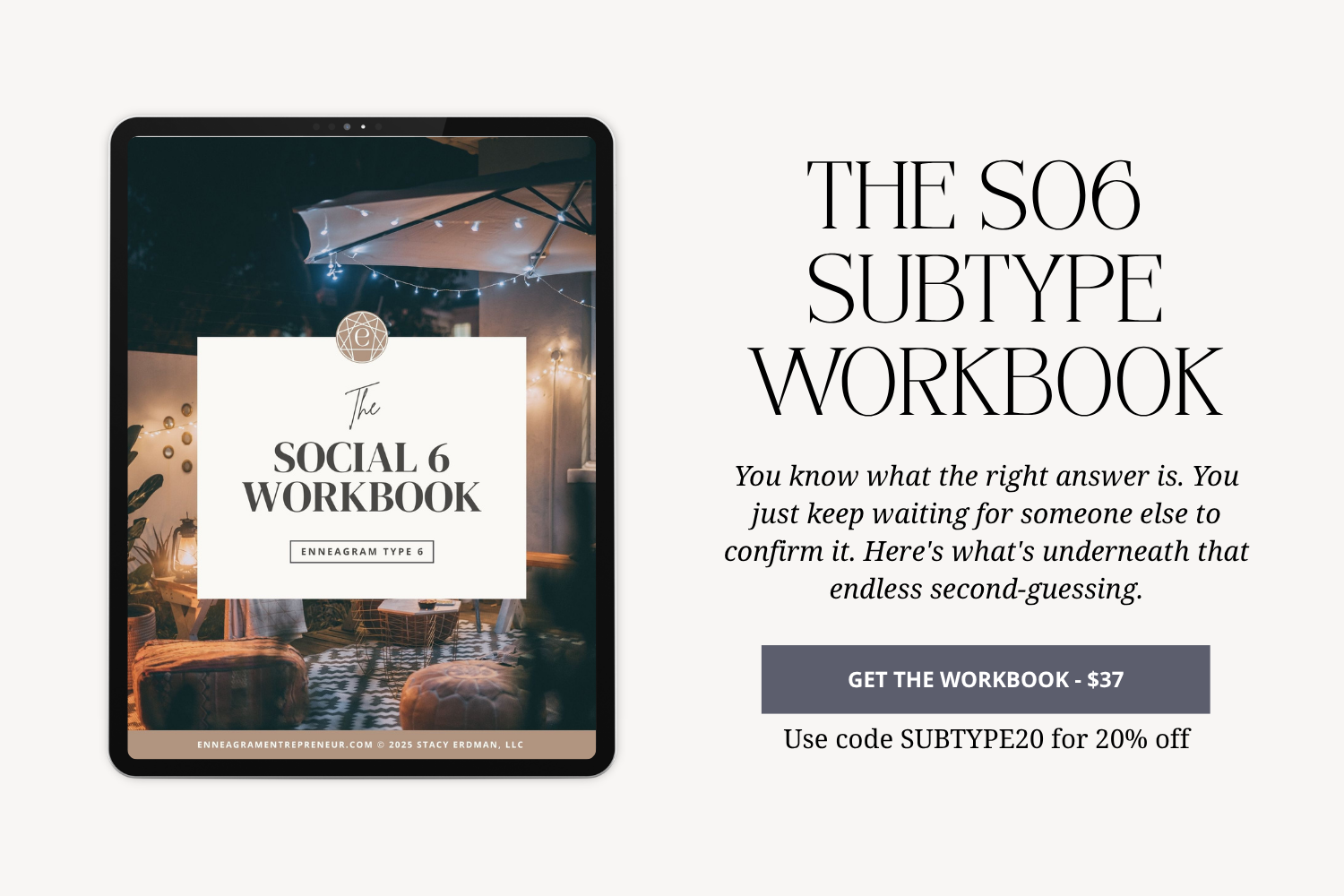
This guided workbook is designed to help you work with the patterns behind your SO6 subtype.
Social 6s in Relationships and Work
How does this subtype show up in daily life? Let’s look at relationships and work together, since the themes overlap.
❤️ In Relationships
Social 6s bring loyalty, dependability, and responsibility to relationships. They want to be trustworthy partners and friends who fulfill their roles faithfully.
But their sense of duty can sometimes overshadow intimacy. They may prioritize obligations over emotional connection, or they may expect partners to live up to equally high standards of loyalty and responsibility.
Growth in relationships means learning to balance duty with openness, vulnerability, and flexibility.
💼 At Work
In professional life, Social 6s are diligent, responsible, and reliable. They thrive in structured environments with clear rules and expectations. Colleagues often view them as principled team players who can be trusted to follow through.
However, they may struggle in chaotic or ambiguous environments where rules are unclear. They may also hesitate to assert their own judgment, relying too heavily on authority. Their growth edge at work is to cultivate confidence in their own discernment and adaptability.
How Social 6s Differ from Other Type Six Subtypes
All Sixes want safety and stability, but each subtype secures it differently:
Social 6 vs. Self-Preservation 6:
Self-Preservation 6s build safety through warmth, loyalty, and close relationships.
Social 6s build safety through duty, rules, and collective structures.
Self-Preservation 6s are more relationally focused; Social 6s more system-focused.
Social 6 vs. Sexual 6:
Social 6s find security in loyalty to authority and group belonging.
Sexual 6s find security in intensity, passion, and bold confrontation.
Social 6s are dutiful and rule-abiding; Sexual 6s are fiery and challenging.
This helps explain why some Sixes look warm and friendly, others rule-bound, and others bold and intense.
The Growth Path for Social 6s
For the Social Six, growth means moving from fear-driven dutyto grounded discernment.
Key growth practices include:
Trust your own judgment:
Notice when you defer too quickly to authority.Balance duty with freedom:
Allow space for spontaneity alongside responsibility.Question rules:
Ask whether structures truly serve well-being, not just conformity.Soften rigidity:
Practice flexibility and openness in uncertain situations.
When Social 6s embrace inner confidence, they become principled leaders who serve communities with both loyalty and wisdom.
If this resonated, the SO6 Subtype Workbook will take you deeper:
Final Thoughts
The Social Six—Duty, or the Responsible Six—is principled, dependable, and loyal. They safeguard communities through responsibility and structure. Yet their growth lies in softening rigidity, trusting their own discernment, and balancing duty with authenticity.
If you identify with this subtype, you might ask yourself:
“Am I following rules out of fear—or am I choosing responsibility with freedom and wisdom?”
Want to explore all 27 Enneagram subtypes and see how they shape behavior, relationships, and growth?
👉 Download my free Enneagram Subtypes Guide here.